Conrad Tokyo CONRAD
CONRAD

Conrad Tokyo

Tokyo · Japan
Top 43%
Excellent

THE BOTTOM LINE

Conrad Tokyo remains one of the city's most reliable luxury stays because of its staff, its breakfast, and its views — not its hardware. Book a bay-view room, leverage status or AmEx FHR if you can, and it's genuinely hard to beat. Pay rack rate without loyalty perks and the aging bathrooms and peak-season operational strain become harder to ignore.

CHARACTER & IDENTITY

Polished, service-led, and unusually spacious for Tokyo — Conrad Tokyo occupies the top ten floors of the Shiodome Tower, positioning itself as a Hilton-group luxury anchor in Minato. It competes most directly with Mandarin Oriental Tokyo and The Peninsula Tokyo on service pedigree, though it sits a notch below both on hard-product newness. The property leans corporate-meets-leisure: diplomats, Hilton loyalists, and repeat-visit families who prize warmth over formality.

WHO IT'S FOR

BEST FOR

Hilton Honors Diamond members and AmEx Platinum holders who can unlock meaningful upgrade, lounge, and breakfast value — this is where Conrad Tokyo outperforms its rack rate. Also strong for milestone trips (anniversaries, significant birthdays), repeat Tokyo visitors who want a quiet base near Ginza rather than Shinjuku buzz, and families who value spacious connecting rooms.

SHOULD LOOK ELSEWHERE

You want a brand-new hard product with the latest in-room technology — the 2005 bones show, and Four Seasons Otemachi or Janu Tokyo will feel sharper. Also skip it if you're a first-time Tokyo visitor who wants to walk out the door into street-level energy; Shiodome is an office district that empties after 6pm.

WHAT GUESTS LOVE — AND WHAT THEY DON'T

STRENGTHS
+Staff memory and warmth Named team members — Peter, Fumie, Izumi, Monica — are cited across years of reviews as the reason guests rebook.
+Breakfast at Cerise Consistently ranked by repeat luxury travelers as among Tokyo's best hotel breakfasts.
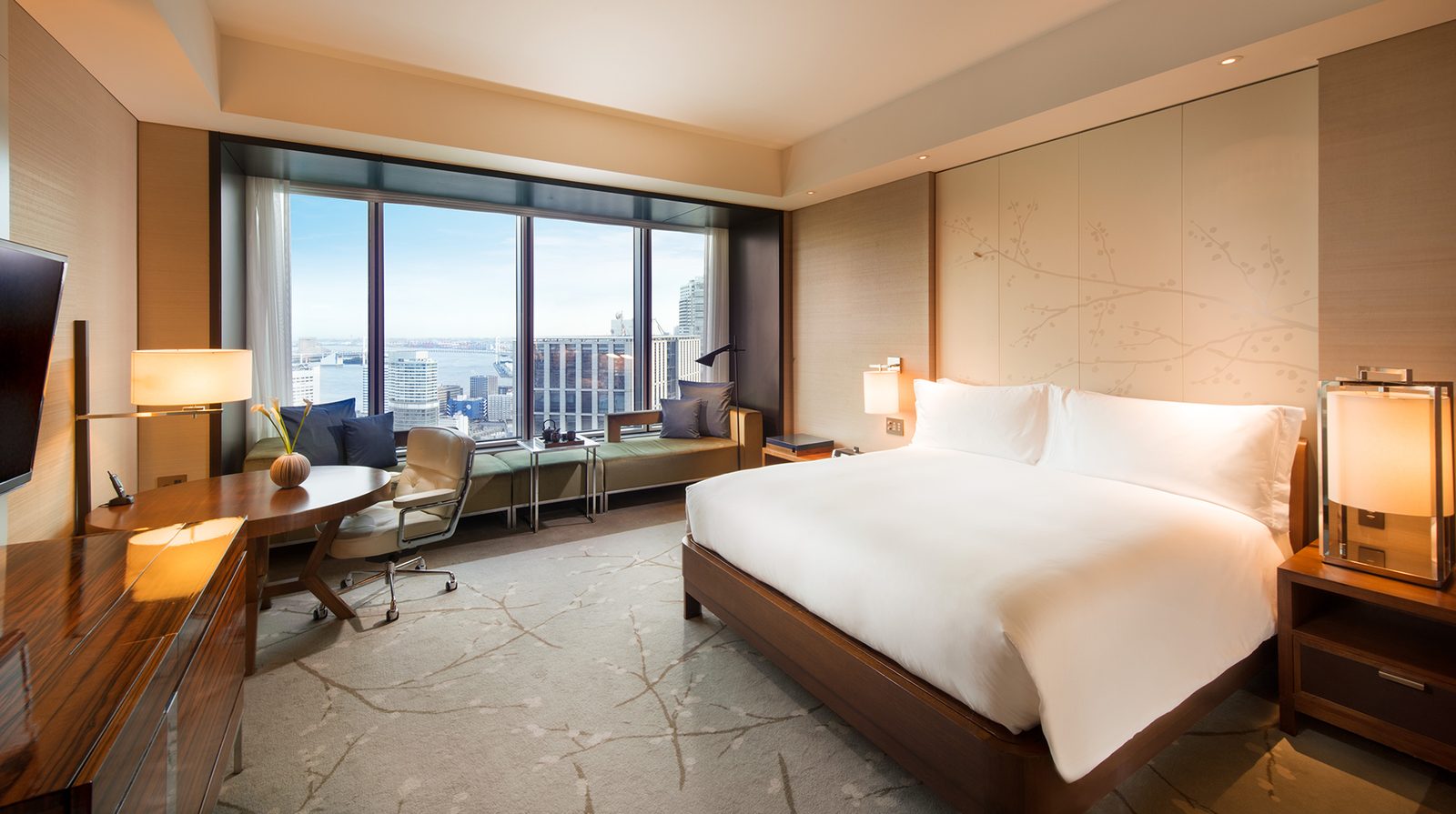
+Bay-view rooms Panoramic views over Hamarikyu Gardens and Tokyo Bay, with a window-seat sofa built for lingering.
+Spa and pool 25-meter lap pool with skyline views, individual jacuzzi tubs, sauna and steam room — genuinely relaxing and rarely crowded off-peak.
+Transit access Direct-connected to two stations and Narita Limousine Bus stop; 20 minutes to Haneda by taxi.
See all 5 strengths and 5 weaknesses
Members get the full breakdown from hundreds of reviews.
See all 5 strengths and 5 weaknesses
Members get the full breakdown from hundreds of reviews.
WEAKNESSES
Aging hardware Bathroom fixtures, carpets, and in-room tech (non-smart TVs, dated toilets) lag the price point and newer competitors.
Peak-season check-in chaos Long waits, inconsistent Diamond upgrade recognition, and occasional billing mix-ups surface repeatedly.
Executive Lounge capacity Frequently oversubscribed — reservation systems, 1-hour slots, and crowded cocktail hours undermine the premium.
Train noise on city-view rooms Elevated tracks audible even on high floors; bay-view side is materially quieter.
Restaurant pricing relative to quality Casual dining and wine list are expensive even by hotel-standard Tokyo rates.
See all 5 strengths and 5 weaknesses
Members get the full breakdown from hundreds of reviews.

CATEGORY-BY-CATEGORY ANALYSIS

Service 5.7

The clear standout, and the reason most guests return. Named staff — particularly in guest relations, the executive lounge, and concierge — are remembered across stays and by name. The weak spot is check-in during peak periods (cherry blossom, New Year, summer holidays), where waits of 30–60 minutes and inconsistent status recognition recur.

Food 7.7

Breakfast at Cerise is a genuine highlight — wide buffet plus à la carte eggs, including a well-regarded lobster omelette. The teppanyaki at Kazahana and Cantonese at China Blue draw consistent praise; Collage (French) is more divisive. Bar and restaurant pricing is high even by Tokyo luxury standards, and wine-by-the-glass options skew narrow.

Rooms 4.6

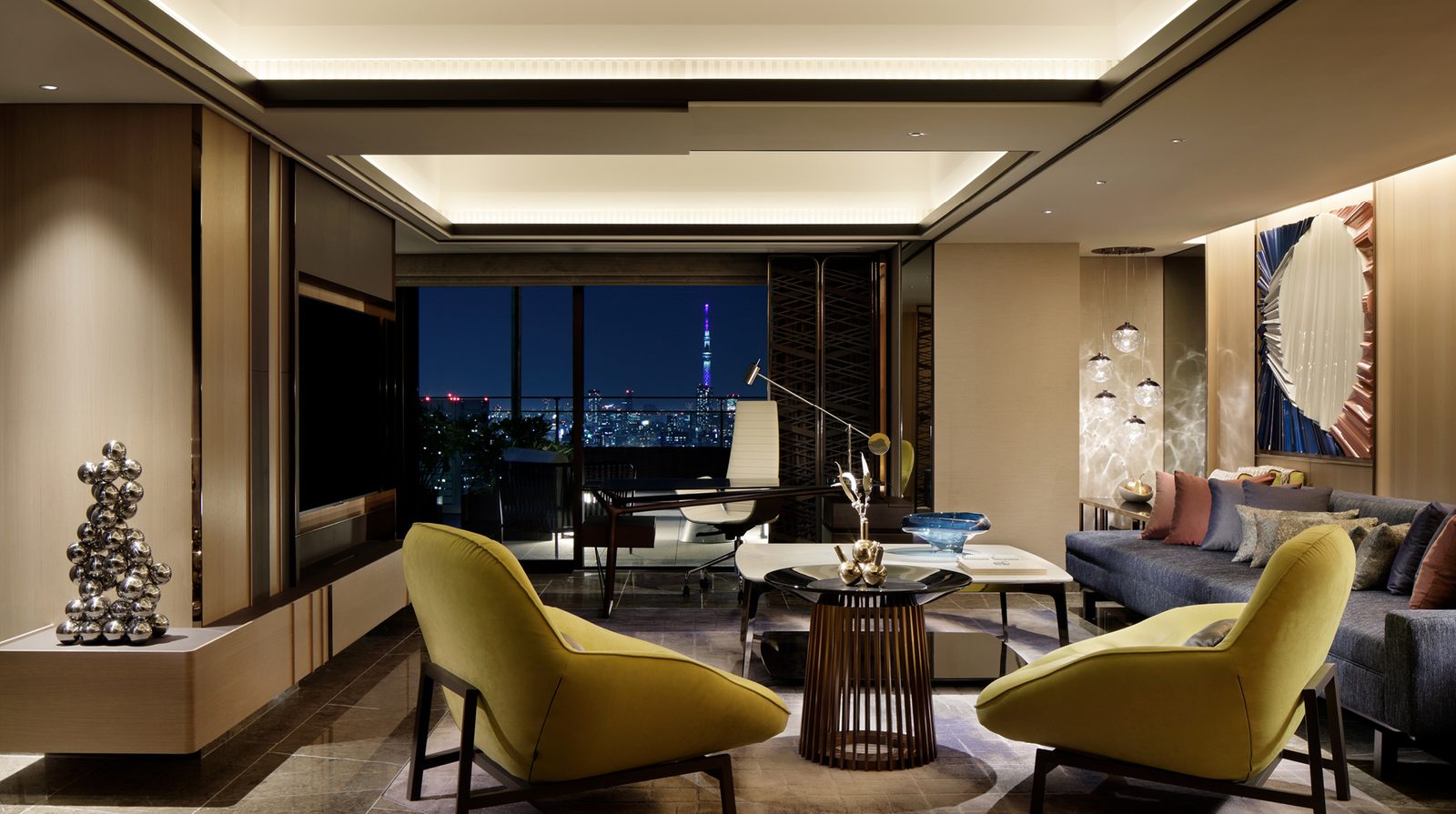
Large by Tokyo standards (48 sqm entry-level), with floor-to-ceiling windows, window-seat sofas, and heated bathroom floors. Bay-view rooms overlooking Hamarikyu Gardens and Tokyo Bay are markedly better than city-view rooms, which face office towers and catch elevated-train noise. The hardware is aging — opened in 2005 and showing it in bathroom grout, furniture scuffs, and dated TVs.

Location 7.3

Directly above Shiodome Station (Oedo Line, Yurikamome), with covered walkways to Shimbashi Station and a 10-minute walk to Ginza. Tsukiji Outer Market and Hamarikyu Gardens are on the doorstep. The immediate area is a quiet business district — deserted at night, with few dining options within a two-block radius.

Value 7.6

Conditional. At award-night rates, AmEx FHR bookings, or points redemptions, it punches well above its price. At rack rates approaching $1,500 during peak season, the aging hardware makes it harder to justify against newer competitors.

Ambiance 3.6

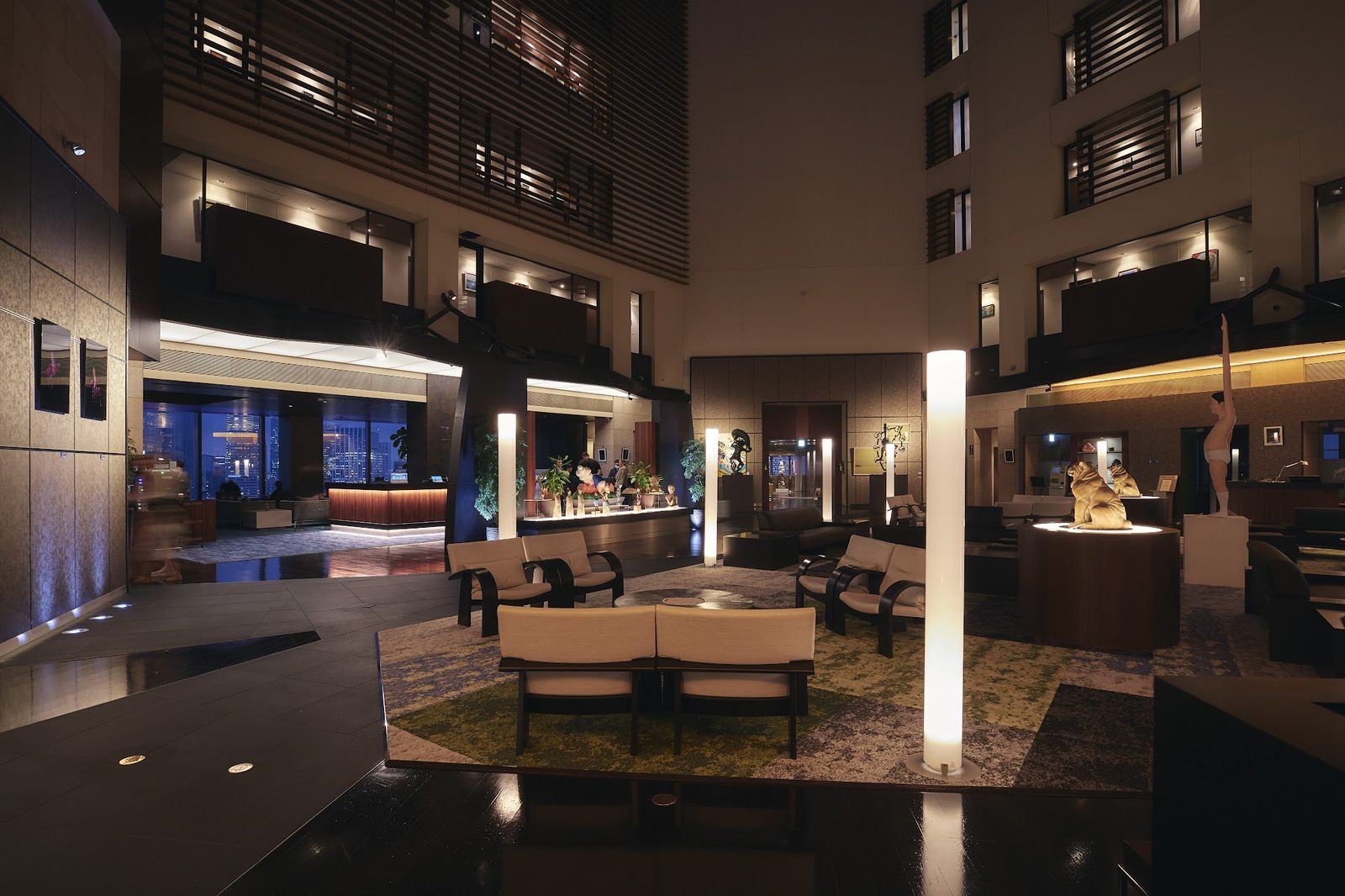
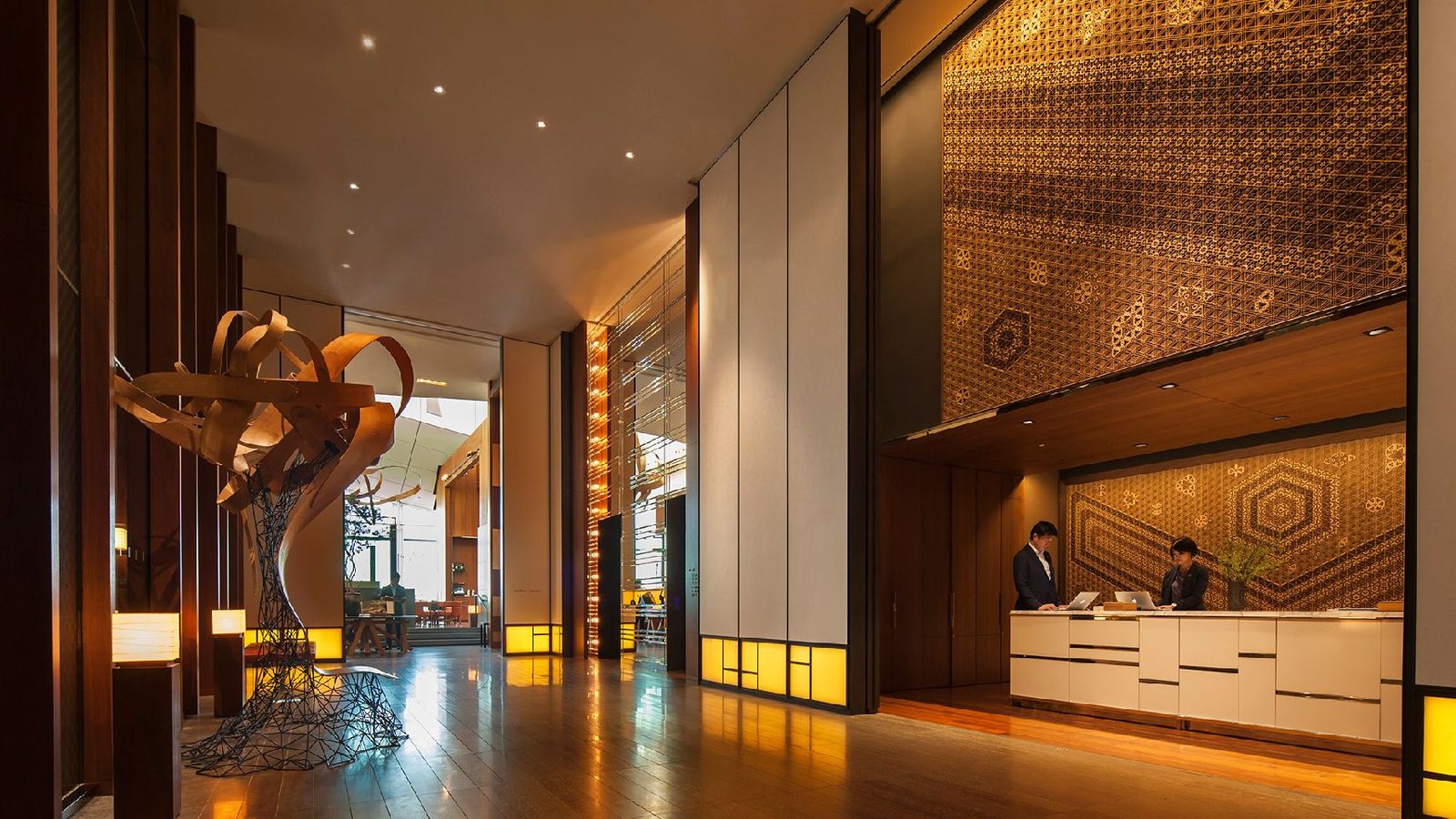
The 28th-floor sky lobby with double-height ceilings and a live pianist delivers genuine arrival drama. Interiors are understated modern-Japanese — dark wood, minimalist lines, signature scent. Some guests find it sleek and calming; others find it dated compared to newer Tokyo luxury openings.

Per-category analysis
Long-form review of all six scores and how Tokyo peers compare.
Service 5.7

The clear standout, and the reason most guests return. Named staff — particularly in guest relations, the executive lounge, and concierge — are remembered across stays and by name. The weak spot is check-in during peak periods (cherry blossom, New Year, summer holidays), where waits of 30–60 minutes and inconsistent status recognition recur.

Food 7.7

Breakfast at Cerise is a genuine highlight — wide buffet plus à la carte eggs, including a well-regarded lobster omelette. The teppanyaki at Kazahana and Cantonese at China Blue draw consistent praise; Collage (French) is more divisive. Bar and restaurant pricing is high even by Tokyo luxury standards, and wine-by-the-glass options skew narrow.

Rooms 4.6

Large by Tokyo standards (48 sqm entry-level), with floor-to-ceiling windows, window-seat sofas, and heated bathroom floors. Bay-view rooms overlooking Hamarikyu Gardens and Tokyo Bay are markedly better than city-view rooms, which face office towers and catch elevated-train noise. The hardware is aging — opened in 2005 and showing it in bathroom grout, furniture scuffs, and dated TVs.

Location 7.3

Directly above Shiodome Station (Oedo Line, Yurikamome), with covered walkways to Shimbashi Station and a 10-minute walk to Ginza. Tsukiji Outer Market and Hamarikyu Gardens are on the doorstep. The immediate area is a quiet business district — deserted at night, with few dining options within a two-block radius.

Value 7.6

Conditional. At award-night rates, AmEx FHR bookings, or points redemptions, it punches well above its price. At rack rates approaching $1,500 during peak season, the aging hardware makes it harder to justify against newer competitors.

Ambiance 3.6

The 28th-floor sky lobby with double-height ceilings and a live pianist delivers genuine arrival drama. Interiors are understated modern-Japanese — dark wood, minimalist lines, signature scent. Some guests find it sleek and calming; others find it dated compared to newer Tokyo luxury openings.

When to book

✓ Cheapest
Aug 24–30
$404
$ Shoulder
Feb 8–14
$568
✗ Avoid
Dec 26 – Jan 1
$1,182
When to book
The cheapest, shoulder, and priciest weeks of the year.

365-day price curve

$0 $500 $1k $1.5k $2k $2.5k $3k MayJulSepNovJanMar
365 days of nightly rates
Every night of the year, plotted.

Month × day-of-week

May
Jun
Jul
Aug
Sep
Oct
Nov
Dec
Jan
Feb
Mar
Apr
Mon
$0.5k
$0.5k
$0.4k
$0.4k
$0.4k
$0.9k
$0.6k
$0.7k
$0.4k
$0.5k
$0.6k
Tue
$0.7k
$0.5k
$0.4k
$0.4k
$0.4k
$0.8k
$0.6k
$0.7k
$0.4k
$0.5k
$0.6k
Wed
$0.6k
$0.5k
$0.4k
$0.4k
$0.4k
$0.6k
$0.6k
$0.7k
$0.4k
$0.5k
$0.6k
Thu
$0.5k
$0.6k
$0.4k
$0.4k
$0.4k
$0.7k
$0.6k
$0.8k
$0.5k
$0.5k
$0.6k
Fri
$0.9k
$1.2k
$0.5k
$0.4k
$0.5k
$1.1k
$0.7k
$0.6k
$0.6k
$0.6k
$0.6k
Sat
$0.9k
$1.1k
$0.7k
$0.7k
$0.7k
$1.2k
$0.8k
$0.8k
$0.7k
$0.7k
$0.6k
Sun
$0.6k
$0.6k
$0.5k
$0.4k
$0.5k
$0.8k
$0.7k
$0.7k
$0.5k
$0.6k
$0.6k
M
T
W
T
F
S
S
May
$0.5k
$0.7k
$0.6k
$0.5k
$0.9k
$0.9k
$0.6k
Jun
$0.5k
$0.5k
$0.5k
$0.6k
$1.2k
$1.1k
$0.6k
Jul
$0.4k
$0.4k
$0.4k
$0.4k
$0.5k
$0.7k
$0.5k
Aug
$0.4k
$0.4k
$0.4k
$0.4k
$0.4k
$0.7k
$0.4k
Sep
$0.4k
$0.4k
$0.4k
$0.4k
$0.5k
$0.7k
$0.5k
Oct
$0.9k
$0.8k
$0.6k
$0.7k
$1.1k
$1.2k
$0.8k
Nov
$0.6k
$0.6k
$0.6k
$0.6k
$0.7k
$0.8k
$0.7k
Dec
$0.7k
$0.7k
$0.7k
$0.8k
$0.6k
$0.8k
$0.7k
Jan
$0.4k
$0.4k
$0.4k
$0.5k
$0.6k
$0.7k
$0.5k
Feb
$0.5k
$0.5k
$0.5k
$0.5k
$0.6k
$0.7k
$0.6k
Mar
$0.6k
$0.6k
$0.6k
$0.6k
$0.6k
$0.6k
$0.6k
Apr
Month × day-of-week heatmap
See which day of the week is cheapest in each month.
Members
Unlock luxury intelligence
  • Interactive dashboard
  • 365 days of nightly rates
  • Day × month heatmap
  • All 6 per-category reviews
  • All 5 strengths & weaknesses
  • Compare up to 6 hotels
All 6 scores
Service
5.7
Food
7.7
Rooms
4.6
Location
7.3
Value
7.6
Ambiance
3.6
$356 – $2,659
per night · 365 nights tracked
MJJASONDJFMA
View full 365-day pricing

FREQUENTLY ASKED QUESTIONS

Is Conrad Tokyo worth it?
Conrad Tokyo earns an Excellent tier and ranks #458 of 1,075 luxury hotels in our index — Top 43% globally, not the top of the city. It's worth it if you can leverage Hilton Diamond status or AmEx Fine Hotels & Resorts perks; the staff, breakfast, and bay views deliver. At rack rate without loyalty benefits, the aging hardware makes the math harder.
How much does Conrad Tokyo cost per night?
Nightly rates run from $356 to $2,659, with a median of $546. Pricing swings sharply by season: August averages $446, while October peaks at $870. That's a roughly 49% spread between the cheapest and most expensive months, so timing matters more here than at many Tokyo competitors.
What is Conrad Tokyo best known for?
Food and dining (7.7) and value (7.6) are its strongest categories. Beyond the numbers, the hotel is known for staff continuity — team members like Peter, Fumie, Izumi, and Monica are cited across years of reviews as the reason guests rebook — plus the breakfast and bay views from higher floors.
What are the drawbacks of staying at Conrad Tokyo?
Ambiance and design scores just 3.6, the hotel's clear weak point. The 2005-era hardware shows: bathroom fixtures, carpets, and in-room tech (non-smart TVs, dated toilets) lag the price point and newer competitors. Skip it if you want a brand-new hard product — Four Seasons Otemachi or Janu Tokyo feel sharper. Shiodome also empties after 6pm, which doesn't suit first-time Tokyo visitors who want street-level energy.
Who is Conrad Tokyo best suited for?
Hilton Honors Diamond members and AmEx Platinum holders who can unlock upgrades, lounge access, and breakfast — that's where Conrad Tokyo outperforms its rack rate. Also strong for milestone trips, repeat Tokyo visitors who prefer a quiet Ginza-adjacent base over Shinjuku buzz, and families needing connecting rooms. First-time visitors wanting walkable street energy should look elsewhere; Shiodome is an office district.
When is the best time to book Conrad Tokyo?
August is the cheapest month at an average $446 per night, versus October's peak of $870 — booking in August saves roughly 49% against peak season. If summer heat and humidity are tolerable, it's the clearest value window. October's foliage and conference demand drive rates to their annual high.
How does Conrad Tokyo compare to other luxury hotels in Tokyo?
Conrad Tokyo (Top 43%, Excellent, from $356) sits well below the city's top tier. Bvlgari Hotel Tokyo ranks Top 4% (Exceptional) but starts at $1,069. Four Seasons Hotel Tokyo at Otemachi is Top 7% (Exceptional) from $614 and offers a sharper hard product. Shangri-La Tokyo, Top 26% (Outstanding), starts at $500 — closer in price with a stronger ranking.