 HOSHINOYA
 HOSHINOYA Guguan
THE BOTTOM LINE
CHARACTER & IDENTITY
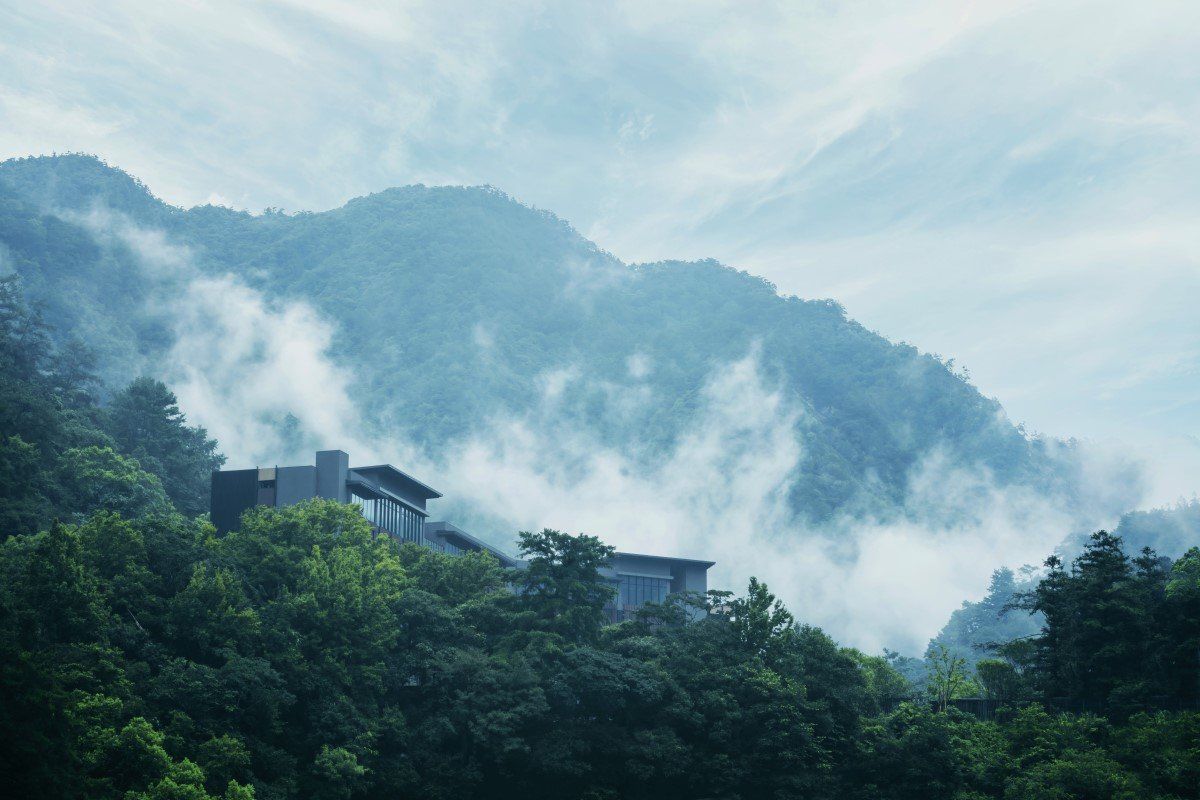
Tucked at the end of a winding road in Taichung's Guguan hot spring valley, Hoshinoya Guguan is the Japanese Hoshino group's flagship onsen resort in Taiwan — a 50-room property built around a landscaped water garden, private in-room onsen, and kaiseki dining. It competes less with Taiwan's urban luxury hotels than with high-end Japanese ryokan like Hoshinoya Karuizawa, and it's priced accordingly. The target guest is a couple or family seeking seclusion, ritualized Japanese hospitality, and serious hot spring culture.
WHO IT'S FOR
Couples on honeymoons or milestone anniversaries who want a Japanese ryokan experience without flying to Japan, and families with older children who appreciate onsen culture. Also ideal for repeat Hoshinoya guests who already understand the brand's rhythms.
You expect Western resort inclusions — flexible all-day dining, a gym, lively bars, free minibars — or if you're traveling with toddlers (the open staircases are a real hazard). Also skip it if a two-hour mountain transfer from the nearest HSR station sounds like a dealbreaker.
WHAT GUESTS LOVE — AND WHAT THEY DON'T
CATEGORY-BY-CATEGORY ANALYSIS
Warm, attentive, and well-trained, with a distinctly Japanese choreography. Staff handle anniversaries, dietary needs, and children thoughtfully — personalized cakes, rebooked spa treatments, gifted photo frames. The weak spot is pre-arrival communication: the booking system is clunky and email responses can be slow or unclear.
The kaiseki dinner is beautiful and technically accomplished, but opinions split sharply on whether it justifies the roughly NT$4,000 per person price. Breakfast offers Taiwanese, Japanese, or Western options and is consistently strong. The central issue is variety: there is only one restaurant, menus repeat over multi-night stays, and in-room dining options are narrow.
Exceptional. Maisonette layouts with 24-hour flowing private onsen, mountain-facing glass walls, and considered Japanese minimalism. Bathrooms are generous, amenities are Shiseido. Recurring complaints: floor-style mattresses feel unsupportive to Western backs, staircases lack railings (a hazard with young children), and blackout blinds are imperfect.
Remote by design — 90 minutes to two hours from Taichung HSR through mountain roads. Rewarding once you arrive, but factor in the transfer. The Shaolai hiking trail sits directly behind the property, and the small Guguan hot spring town is walkable.
The most divisive category. At roughly NT$30,000–45,000 per night before meals, expectations run high. Those who understand the Japanese ryokan model generally find it worth it; those expecting Western luxury inclusions (free minibar beyond basics, flexible all-day dining, gym) often don't.
The signature strength. The water garden, pavilions, bamboo-lined entrance, and preserved old-growth trees create genuine sanctuary. Evenings with cicadas and mist against the mountains are the experience guests remember most.
Warm, attentive, and well-trained, with a distinctly Japanese choreography. Staff handle anniversaries, dietary needs, and children thoughtfully — personalized cakes, rebooked spa treatments, gifted photo frames. The weak spot is pre-arrival communication: the booking system is clunky and email responses can be slow or unclear.
The kaiseki dinner is beautiful and technically accomplished, but opinions split sharply on whether it justifies the roughly NT$4,000 per person price. Breakfast offers Taiwanese, Japanese, or Western options and is consistently strong. The central issue is variety: there is only one restaurant, menus repeat over multi-night stays, and in-room dining options are narrow.
Exceptional. Maisonette layouts with 24-hour flowing private onsen, mountain-facing glass walls, and considered Japanese minimalism. Bathrooms are generous, amenities are Shiseido. Recurring complaints: floor-style mattresses feel unsupportive to Western backs, staircases lack railings (a hazard with young children), and blackout blinds are imperfect.
Remote by design — 90 minutes to two hours from Taichung HSR through mountain roads. Rewarding once you arrive, but factor in the transfer. The Shaolai hiking trail sits directly behind the property, and the small Guguan hot spring town is walkable.
The most divisive category. At roughly NT$30,000–45,000 per night before meals, expectations run high. Those who understand the Japanese ryokan model generally find it worth it; those expecting Western luxury inclusions (free minibar beyond basics, flexible all-day dining, gym) often don't.
The signature strength. The water garden, pavilions, bamboo-lined entrance, and preserved old-growth trees create genuine sanctuary. Evenings with cicadas and mist against the mountains are the experience guests remember most.
When to book
365-day price curve
Month × day-of-week


- Interactive dashboard
- 365 days of nightly rates
- Day × month heatmap
- All 6 per-category reviews
- All 5 strengths & weaknesses
- Compare up to 6 hotels